The Asana (Posture) in Hatha-Yoga

Asanas and pranayama which are third and fourth limb of the eight limbed path that forms the backbone of Hatha-Yoga. They are: postures (asana) aimed at attaining mastery over the body, and breath control (pranayama) the power over our vital energy, which is our breath (Varenne 111-4). The goal of pranayama is to make ones respiration rhythmic and progressively slower, this is said to allow the practitioner to penetrate other states of consciousness through the harmonization with one’s life force (prana). Controlling the pranayama is done through the suspension of inhalation (puraka), retention (kumbhaka) and exhalation (recaka) and slowing of the overall breathing rhythm. Some yogis with practice can stop breathing for over five minutes (Jones 9895).

Whimsical bas-relief depicting a cat performing a balancing and stretching posture (asana), associated with the practice of Hatha Yoga; Mahabalipuram, India

Hatha-yoga is the “physical yoga which teaches the aspirant how to control his body (Fuller 51),” It means the union (yoga) between sun and moon or the two different elements of the body-mind union (Feuerstein 38), and is the type of yoga most commonly known in the west. Although yoga is thought to have existed before Patanjali, Patanjali’s Yoga Sutras form the foundation of yoga, along with the Hatha-Yoga Pradipika. According to scriptures there were believed to be originally 8,400,000 asanas, each representing an incarnation needed to be lived before liberation could be achieved; however, only around a few hundred are known today. In the Asana Pranayama Mudra Bandha one of the most popular current yoga manuals, only 84 asanas are discussed (Saraswati  9). Animal asanas came about through the risis observation of animals; they saw how the animals lived and created these asanas based on their movements. They then discovered how a particular posture can affect certain hormonal secretions of the body which can therefore improve one’s health. For example, sharshankasana the hare pose may influence the flow of adrenaline such as in the “fight or flight” response, as seen in hares who are easily startled (Saraswati 10). The animal poses are believed to have been created to remind the practitioner that life is sacred and the world is full of living creatures (Radha 6).

Mastering any asana is the first stage in yoga. Poses aimed to increase strength and health can be done in many different ways based on the skill level of the practitioner. Asanas are divided into different categories depending on the text; Swami Sivananada Radha’s book: Hatha Yoga: The Hidden Language divides them into categories of structures, tools, plants, fish, reptiles, insects, birds, animals, and finally shavasana, and the text by Swami Satyananda Saraswait: Asana Pranayama Mudra Bandha divides poses into beginner, intermediate and advanced. Various poses overlap and many are included in both texts, different yoga sources however usually have different tips and information about particular asanas so many practitioners study a variety of yoga texts.

The Beginner Group according to Saraswati’s text consists of the pawanmuktasana series, exercises for the eyes, relaxation asanas, meditation asanas, varjrasana group of asanas, standing asanas, surta namaskara, and chandra namaskarais. The intermediate group consists of the padmasana group of asanas, backward bending asanas, forward bending asanas, spinal twisting asanas and balancing asanas. The advanced group does not have any subcategories and should be attempted only when the beginner and intermediate poses have been mastered (Saraswati 9-360).

Beginner’s yoga is done for a variety of purposes, whether the practitioner is just starting their journey through yoga, or due to illness or bodily constraints is unable to do more advanced poses. Although the beginner asanas may be simple, the health benefits are alleged to be numerous and should not be underestimated.  The pawanmuktasana series is believed to be very useful for the management of various disorders and maintaining health by developing awareness of the body (Saraswati  21). It is further separated into three groups of asanas: the anti-rheumatic group, the digestive/abdominal group and shakti bandha or energy blocking group (Saraswati 22).

The anti-rheumatic group of postures is aimed at a low level of physical exertion to loosen the joints and to help with ailments such as arthritis, high blood pressure and heart problems. A few examples are: janu chakra (knee crank) aimed at loosening the knee joints and poorna titali (full butterfly) which can alleviate tiredness from long hours of standing or walking (Saraswati 23-44).

The digestive/abdominal group is said to be helpful for people with ailments such as indigestion, reproductive disorders, diabetes, excess gas, constipation, acidity, and lack of appetite. By strengthening the digestive system and clearing energy blockages of the abdominal area these ailments can be relieved. A few postures are:  pada sanchalanasana (cycling) which helps to strengthen the abdominal and lower back muscles while also loosening the knee and hip joints and jhulana lurhakanasana (rocking and rolling) which massages the back, buttocks and hips (Saraswati 44-59).

The energy blocking postures are aimed mostly at improving energy flow. It is also thought to be useful for menstrual problems, a stiff back, toning pelvic organs and muscles, and to improve overall endocrine function. This series is also commonly done prenatally and after birth, as it tones the reproductive muscles and aids in child birth. A few common positions are; rajju karshanasana (pulling the rope), which loosens the shoulder joints and stretches the muscles of the upper back, the chakki chalanasana (churning the mill), which is believed to help regulate the menstrual cycle as it improves the function of the organs and nerves of the pelvis and abdomen. Chakki calanasana can be preformed up to the third month of pregnancy (Saraswati 60-73).

Yoga exercises for the eyes are done to improve visual health, and it is believed that through practice and patience one can improve or even reverse eye disorders such as glaucoma, cataracts and trachoma which are due to defective ocular muscles. An example of a yogic eye exercise is palming. This is done by placing warm palms (due to vigorous rubbing) over the eyelids to relax the eye muscles; the warmth of the hands stimulates circulation of the blood and other parts of the eye (Saraswati 74-8).

Asanas done either before or following yoga practice are typically referred to as relaxation asanas. One example is the shavasana (corpse pose) or death pose which would done by simply lying on your back with the palms facing upward. It is believed that it is useful in developing whole body awareness (Saraswati 85-7) and “the best sign of a good savasana is a feeling of deep peace and pure bliss. Radha the author of Hatha-Yoga: The Hidden Language explains savasana as a watchful surrendering of the ego. Forgetting oneself, one discovers oneself (Radha 254).”

Meditation asanas are done to allow the practitioner to sit still for extended lengths of time. The most popular example is the pasmasana (lotus pose). It is referred to as the “royal posture” as it is both glamorous and graceful. The Lotus symbolizes birth and death, the interaction of the created forces. To the Chinese it represents the past, present and future as the plant bears fruit, flowers and buds simultaneously (Radha 121). This asana creates a firm foundation to begin meditation as it allows the body to be motionless in a steady position. It also is said to relax the nervous system by putting a slight pressure on the spine (Saraswati 93-9).

The vajrasana group of asanas are easy to perform and are beneficial for many aspects of the body and spirit. They are believed regulate the sexual energy as well as reproductive and digestive organs (Saraswati 108-134). In India the simhasana (loin pose) is seen as the absolute representation of royal strength and majesty, it is believed to help one to discover the power masked within oneself and the danger it is to keep subdued pretending to be a mere lamb. Simhasana pose is explained by placing the right foot under the left buttock, and the left under the right. Bring the weight forward on the knees with the arms straight and the palms of the hands placed on the knees. Stretch the jaw wide open, and stretch the tongue out toward the chin. Forcefully exhale air out the mouth with the throat open (Radha 239-41).

Standing asanas are claimed to be very beneficial to those who have back pain or spend a lot of time sitting as they stretch and strengthen the back. The tadasana (palm tree pose) is believed to be especially helpful for stretching the back and loosening the spine; as it is done by reaching to the sky with both arms and raising the heels off the ground. It is said to increase balance both physically and mentally and can be useful during the first six months of pregnancy to keep the abdominal muscles strong (Saraswati 135-140).

Surya namaskara (salutations to the sun) is a group of asanas that were not originally in the yoga scriptures, but were later added on. Surya namaskara is thought to be one of the most useful groups of postures to aid in health yet at the same time is helpful in “preparing for spiritual awakening and the resulting expansion of awareness (Saraswati 159).” It incorporates pranayama, mantra and meditation and is said to be most beneficial if done in the morning. There are twelve asanas which represent the twenty-four hours of the day, the twelve zodiac phases of the year and the biorhythms of the body. The asanas in sequence are: 1. pranamasana (prayer pose), 2. hasta utthanasana (raised arms pose), 3. padahatasana (hand to foot pose), 4. ashwa sanchalanasana (equestrian pose), 5. parvatasana (mountain pose), 6. ashtanga namaskara (salute with eight parts or points), 7. bhujangasana (cobra pose), 8. parvatasana (mountain pose), 9. ashwa sanchalanasana (equestrian pose), 10. padhatasana (hand to foot pose),  11. hasta utthanasana (raised arm pose) and 12. pranamasana (prayer pose). Asanas 13-24 are a repeating of asanas 1-12 (Saraswati 160-172).

Chandra namaskara (salutation to the moon) are similar to the surya namaskara as they reflect the 14 lunar phases of the moon. Each asanas name represents a day of the lunar cycle and should be practiced at night when the moon is visible, or at dawn during a full moon. The sequence of poses for chandra namaskara are the same sequence as the surya namaskara however, the pose ardha chandrasana is added at position 5 and 11 in the first round, and in positions 19 and 25 in the second round (Saraswati 173).

The intermediate group of asanas consist of the padmasana group, backward bending asanas, forward bending asanas, inverted asanas and balancing asanas. According to Saraswati, the padmasana group is believed to help “clear physical, emotion and mental blocks, help awaken the energy centres of the body and induce tranquility (Saraswati 181).” However, they should only be attempted if the padmasana (lotus pose) can be done for extended periods of time with comfort and zero muscle strain. (Saraswati 181-7).

Backward bending asanas are claimed to have a variety of benefits for the torso, particularly the abdomen and back. They are associated with people who “bend over backwards” for others, so it is believed that people who have an apprehension of these asanas may have a fear of facing life or love (Saraswati 194-5). One well known asana is bhujangasana (cobra pose); buhjanga meaning serpent and, “like a snake [while performing the pose the] spine should be moved from end to end, when the head moves the movement is transmitted to the tail (Radha 146-8).” Many yogis believe to cobra pose to be helpful in relocating slipped disks, improving circulation in the back, and alleviating female reproductive disorders (Saraswati 198).

Forward bending asanas are similar to the backward bending in their difficulty, and such positions are claimed to give an insight into the individual psyche.  Some believe “An inability to bend forward may indicate a stiff, proud or stubborn personality (Saraswati 227),” and those that can are associated with; bowing and humility. Forward bending loosens up the back by utilizing gravity to stretch the muscles; it is typically done by bending from the hips and not the waist, which creates greater flexibility in the poses. The utthita janu sirshasana (standing head between knees pose) is pretty self explanatory, and is believed to help stimulate the pancreas and relax the hip joints and hamstring muscles. Like any inverted pose it is thought to supply the brain with rich blood, revitalizing the mind (Saraswati 227-247).

Inverted asanas, similar to utthita janu sirshasana mentioned above, are believed to cause rich blood to flow to the brain which may therefore cause a change in thinking. They are thought to improve health and reduce anxiety by slowing the breath and creating a better exchange of oxygen and carbon dioxide (Saraswati 258) helping bringing clarity of mind in emotions and in language. These asanas should be done with caution and not preformed around furniture; after vigorous exercise, and should not be attempted by people with high blood pressure or back conditions (Saraswati 259). One of the more difficult inverted asanas is the sirshasana (headstand pose). It is done in six stages working up to the final position with the forearms on each side of the head, interlocking fingers at the back and the rest of the body straight upwards towards the sky. Sirshasana is considered to be the greatest of all asanas (Saraswati 279-283) as it represents: struggle, rebellion, awareness and learning (Radha 44).

The last group of intermediate asanas is the balancing asanas. These poses can be difficult for many if they have not previously developed a good sense of balance. However, with practice they are said to develop the cerebellum; the part of the brain that controls the motion of the body. It can also be helpful when practicing these to find a spot on the wall to focus on to help with balance (Saraswati 290). One example of a balancing asana is the vrikshasana (tree pose) which is done by placing one foot against the opposite legs inner thigh, with the knee facing outwards, and the arms stretched over the head (Radha 102). It is believed that “trees, like people have their destiny, and much of the survival of the tree depends on the sturdiness of the trunk and the branches, sturdiness that must be balanced with flexibility (Radha 109).” Vrikshasana is thought to represent: destiny, firm attachment, seasons of human life, beauty in death and the tree is the symbol of man and the cycle of life (Radha 110).

Advanced asanas are reserved for serious practitioners who have mastered the beginner and intermediate asanas, and should only be attempted when the body is flexible enough and one’s concentration is strong. Any strain in these postures can result in injury (Saraswati 325). Vrishchikasana (scorpion pose) is believed to represent danger, pain, balance, strength, reward, compassion, sexual activity and it is alleged to entice the practitioner with a taste of the nectar of consciousness making them long for more. The scorpion pose is accomplished by resting the forearms on the floor and raising the legs up while the head and chest are lifted, bending the legs at the knees so that the feet slowly lower until they rest on the top of the head (Radha 174-8). [See Saraswati and Radha for an extensive list of yoga asanas with techniques, legends and benefits].

REFERENCES AND FURTHER RECOMENDED READINGS

Bernard, Theos. (1982) Hatha Yoga. London: Hutchinson Group.

Feuerstein, Georg (2002) The Yoga Tradition: Its History, Literature, Philosophy and Practice. New Delhi: Bhavana Books & Prints.

Fuller, J.F.C. (1988) Yoga. Delhi: Sri Satguru Publications.

Jones, L. (Ed.) (2005) Encyclopedia of Religion. (2nd ed., 15 vols.) Detroit: Macmillan Reference USA. Retrieved March 16, 2010, from Gale Virtual Reference Library.

Radha, Swami (1987) Hatha Yoga: The Hidden Language: Symbols, Secrets and Metaphor. Idaho: Timeless Books.

Saraswati, Swami (1997) Asana Pranayama Mudra Bandha. India: Bihar Yoga Bharati.

Sivananda, Swami (1981) Science of Yoga. India: Divine Life Society.

Varenne, Jean (1976) Yoga and the Hindu Tradition. Chicago: Chicago Press.

Related Topics for Further Investigation

Gheranda-Samhita

Hatha-Yoga-Pradipika

Om

Tantrism

Yoga-Bija

Yoga-Yajnavalka

Yoga-Vishaya

Hatha-Ratma-Avali

Siva-Samhita

Yoga-Shastra

Yoga-Karnika

Hatha-Sanketa-Candrika

Raja Yoga

Jnana Yoga

Karma Yoga

Bhakti Yoga

Dhyana

Eight Limbs of Yoga

Noteworthy Websites Related to the Topic

http://www.yogamovement.com/texts/patanjali_book1.html http://www.swamij.com/yoga-sutras.htm http://www.sacred-texts.com/hin/yogasutr.htm

http://yoga.about.com/od/typesofyoga/a/hatha.htm

http://www.santosha.com/asanas/

http://www.yogabasics.com/yoga-postures.html

Article written by: Jillian King (April 2010) who is solely responsible for its content.

The Chandella Dynasty

The Chandella Dynasty began in the first quarter of the 9th century C.E..  They controlled an area known as Jejakabhukti, the capital city of which is believed to be Khajuraho.  Khajuraho is well known for its extravagant temples and buildings erected during the reign of the Chandellas.  The Chandellas were of the Ksatriya class but their origin is greatly debated.  Legend says that they descended from Hemavati’s union with the moon (Dikshit 3).  It is thought that the legend is used to explain the questionable status of the Chandellas.  Historians believe that they originated from aboriginal tribes such as the Gonds, Gahawars and the Bhars (Bose 8).  There is no way to come to a definite conclusion but theory supports an ancestry of the Bhars, because of similar traditions, especially evident in their buildings (Bose 9).

Texts found tell us that the founder of the dynasty is known as Nannuka or Candravarman.  The small community that he created for the Pratiharas was gradually expanded with each generation (Prakash 4).  The dynasty was maintained by Nannuka’s descendents for almost a century until Harsadeva.  Harsa reigned from around 905 until 925 C.E., and in this time he contributed to many great changes that occurred in Northern India.  By assisting in a dispute between two very influential brothers, Harsa increased the power of the Chandella name in India.  Harsa’s grandson Dhanga, who reigned from about 950 to 1008 C.E., continued to expand the Chandella territory.  He also cut off ties with the Pratiharas, of whom the Chandellas had previously been vassals.   According to many inscriptions, Dhanga was a very powerful leader and had control over many other kings.  Although there are minimal records of his reign, Dhanga’s grandson Vidyahara is portrayed by Muslim historians as incredibly powerful.  The most important changes in central to north-western India in the early 11th century are attributed to him (Bose 22-51).  Vidyahara’s son, of whom we can only speculate, is thought to be credited with the decline of the Chandellas (Bose 68).  The decline continues until Kirtivarman’s reign from approximately 1060 to 1100 A.D..  There is a story in which Visnu is incarnated into Gopala to help Kirtivarman revive the dynasty (Bose 74).  Kirtivarman’s revival lasted until the reign of Jatavarman from 1115 to 1120 A.D. when it began to collapse again.  Decline and wars continued until around 1308 when the dynasty collapsed.  Some of their land was retained and the Chandella name is still around today as in central India (Bose 115).

Chandella society appears to have been separated into four different classes or varnas, the Brahmanas, Ksatriya, Vaisya, and Sudras.  Those in the Brahmana varna were responsible for religious studies and were often used as ministers and counsellors to the rulers (Bose 151, Mitra 169).  Brahmanas often counselled for their benefit, both to enjoy many privileges of the high class and to maintain their foothold of power.  The Ksatriya varna is seldom mentioned, but it was known to exist.  It appears as though maintaining class divisions declined in importance during this time and gave way to the prominence of Kula, or family.  More mention is made of highly regarded family names than of the specific classes they belonged to (Bose 152).  Little evidence of the lower classes is known, which implies that, like Kula, individuals put more emphasis on their profession rather than class (Bose 154).

Temple at Khajuraho (Chandella Dynasty)

Religious views varied largely.  There are temples found in Khajuraho constructed for different deities ranging from Hanuman, Nanda and Ganesh to Siva, Visnu, and Sakti.  Siva appears to have accumulated the greatest number of worshippers. Sakti, the Great, Supreme or Mother Goddess seems to have been as popular as Siva. She is often seen as Siva’s consort as well as having many different and names (Prakash 137).  Visnu was the next most popular deity of the time.  All ten of his incarnations are present but not all were equally regarded (Prakash 139).  Some evidence of Jainism and Buddhism has also been found.  Buddhism seems to have had a small following but was dying out (Prakash 142).  Small images have been found but nothing of great significance.  Jains had a much larger following and a substantial number of temples were present in Khajuraho (Prakash 141).  Religious tolerance would have been very important during this time and in these areas because of so many different beliefs.  This is apparent in the occurrence of Brahmanical deities in Jaina temples as well as in temples of different deities (Prakash 144).

References:

Dikshit, R.K.(1977) Candellas of Jejakabhukti. New Delhi: Abhinav Publications.

Bose, Nemai Sadhan (1956) History of the Candellas of Jejakabhukti. Calcutta: K.L. Mukhopadhyay Publishers and Booksellers.

Prakash, Vidya (1967) Khajuraho: A Study in the Cultural Conditions of Chandella Society. Bombay: Taraporevala’s Treasure House of Books.

Mitra, Sisir Kumar (1958) The Early Rulers of Khajuraho. Calcutta: Firma K.L. Mukhopadhyay.

Article written by: Cassandra Howard (April 2010) who is solely responsible for its content.

The Kandariya Mahadeva Temple

The Kandariya Mahadeva is the largest and most magnificent temple at Khajuraho and is a popular tourist site. It is on a level field in Central India (Alles 1988:4). It forms a parallel row with the Chitragupta and Jagadambi temples and is part of the Western group of temples. Vidyadhara, who was part of the Chandella kingdom,  is credited as being the author of the Kandariya Mahadeva, which is supported by an inscription on a mandapa-pilaster in the temple, which reads, “a gift of courtesans on a certain sacred occasion during the reign of king Virimda” (Deva 1987:15). Virimda is thought to be another name for Vidyadhara. Vidyadhara is thought to be the most powerful Indian ruler of his time. He succeeded his father Ganda as king. Under Vidyadhara’s leadership, the Chandella kingdom reached the pinnacle of their prosperity, evident in the intricate and rich design of the Kandariya Madeva temple. There were two contemporary rival powers in Central India, the Kalachuris and the Paramaras, and Vidyadhara had victories over both of them (Deva 1987:15). Vidyadhara’s prestige was heightened when he, with the help of feudatory Kachhapaghata Arjuna, exterminated Rajyapala, the Pratihara king who had retreated when Mahmud, a powerful foreign invader that invaded Kanauj in A.D. 1018. Because of this, Vidyadhara was both feared and respected by the Paramaras and the Kalachuris. Mahmud considered Rajyapala’s assignation as a serious threat and so he challenged Vidyadhara in war. Vidyadhara put together a large army of cavalry, infantry and elephants (Deva 1987:15). Mahmud was scared by the large army. When the two sides met on the first day of battle there was no victor. Mahmud returned to Ghazni. Vidyadhara and his feudatory Kachchhapaghata Vajradaman defended the fort of Gwalior when Mahmud returned in 1022 to challenge Vidyadhara. Vidyadhara was praised as a hero after holding off Mahmud (Deva 1987:15). Vidyadhara built the Kandariya Mahadeva, continuing the tradition of the Chandellas to build great temples.

The Kandariya Mahadeva is dedicated to the god Siva, as shown through the large marble Siva-linga in the sanctum. There are many depictions of Siva, usually with four arms. It is common to see him with a lotus stalk. The images are all over the interior walls and the exterior. Some images are missing hands, heads or other parts. These images have been broken throughout time from age and weather, but the Kandariya Mahadeva is still one of the most well preserved temples from Indian medieval times.

The art at Kandariya Mahadeva is often used as an example for the erotic designs of the Hindu temples. Erotic sculptures are seen on the facades and interior of the temple. The forms of sexuality are intertwined with religious philosophy (Berleant 97).

Sculptures on the temple are tall and slender. They exhibit the sophistication of Khajuraho at the peak of its prosperity. Depicted are nymphs and people in lively or violently agitated postures (Deva 1987:95). The largest monument of Khajuraho is the marble Siva-linga. This form is 100 feet in height and 66 feet wide. These dimensions exclude the platform. The linga is similar to the Visvanatha temple, however it is more elaborate and magnificent.

On one of the outer niches is an image of dancing Chamunda who has twelve arms and is ugly and vicious. He has bulging eyes, large mouth, and shown with veins and bones, dried-up hanging breasts and a scorpion on his sunken belly (see Deva 1990:156). Chamunda wears a jata-mukuta studded with a grinning skull and a pendant with scorpions (see Deva 1990:156). She stands over a headless corpse and there is a preta, which is a soul of the departed, on either side of her. One of these pretas is munching on a human hand. This is just one example of the grotesque depictions on the Kandariya Mahadeva.

The Kandariya Mahadeva is mostly in darkness, excluding a few days of the year. The days when it is not in darkness are when “the rays of the rising sun strike, as if to waken the image of the deity from its slumbers” (Kelley 281). The intent of this illumination process is not elaborated upon (Kelley 281).

The Kandariya Mahadeva is different from other temples of Khajuraho in its architecture in that each element of the plan is grand with elaborate designs and ornamentation (Deva 1987:95). There are a large number of protruding parts and recesses throughout the entire temple. The basement has elegant ornamented moldings. The interior is similar to other temples, however, it is more spacious and filled with sculptures and carvings.

The Kandariya Mahadeva’s platform is the only one that shows protrusions on the rear and the lateral sides; these protrusions correspond with the protrusions of the transepts (see Deva 1987:95). There is a 10 ft. high terrace on which the temple rests. Only a little of the “original façade of the platform survived in the south-eastern corner on the flank of the imposing flight of steps leading to its terrace” (Deva 1987:95). The foundation is granite covered with a plain course of sandstone. There are two overhangs on the west and south that correspond with the overhangs of the west and south transepts (see Deva 1987:98).

The basement is on a granite foundation, covered with two layers of sandstone. The socle (stone serving as a pedestal) rises on the plinth (a flat stone at the base of a column). The socle is comprised of five mouldings. Underneath these moldings is a “recessed band carved with a processional frieze” (Deva 1987:98). On this frieze are depictions of dancers and devotees, acrobats and musicians, warriors and hunters, horses, elephants and erotic themes. The kapota-hood is the last of the five moldings of the socle and is where the junction of two series of nine niches occurs. The niches are large and are set back to back with the basement. The lower niches are now empty and stop just below the kapota, which is an “overhanging cornice or molding representing it” (Deva 1990:398). The upper niches display images of “the Seven Mothers and Ganesa and Virabhadra” (Deva 1987:98) and they start above the kapota.

A sikhara is the “principal spire or tower over the sanctum” (Deva 1990:403). This tower is where the highest roof rises over the sanctum and reaches its highest point, from which are four diminishing half-spires or urah-sringas on each side, and many minor spirelets or sringas. These minor spirelets are of varying sizes (see Deva 1987:98).  The sikhara’s main stem has twelve compressed stories (bhumis), which are specified by eleven semicircular bhumi-alakas. Each bhumi-alaka has a kapota. There are chaitya-arches covering the sikhara (see Deva 1987:98).

The wall or jangha has three rows of sculptures, all equal in size. The boundaries are marked by two series of moldings. The lower series has a projecting band of kirttimukhas. There is a frieze of rosettes below (see Deva 1987:98). The upper series has a projecting faschia that is decorated with stenciled scrolls, which have a ruffled triangular design below. The first series of moldings repeats above the third row of sculptures (see Deva 1987:98). A broad recess showing diamonds in niches is interceded by a pair of kapotas that make up the varandika mouldings of the eave-cornice that separates the wall (jangha) from the sikhara (Deva 1987:98). Balustrades on the five transepts and facades of the mandapa and porch show four moldings. The balconied windows are above these balustrades and the windows have ribbed eaves supported on pillars with atlantean brackets (Deva 1987:98). There are elephant figures found carved in the round, supported by the corners of the eaves. This is similar to the design of the Visvanatha temple.

The north and south faces a vertical row of four sculptured niches that are shown on the roof the vestibule, which is above the eave-cornice (Deva 1987:98). The top of the sculptured niches has a pyramidal roof. Three rows of framed niches, which are behind the four sculptured niches, rise to the gable of the front antefix, which is an ornamented above the top horizontal molding. This particular antefix has a lion figure. There are two rows of sculptured niches on the front of the roof. These niches have an ascending row of four pediments (Deva 1990:150).

The roof over the transepts starts with a row of sculptured niches. There are pyramidal rooflets on either side of the row of niches. Above the niches are four pediments. The lowest pediment on either side is beside a balconied window, while the upper pediments “are adorned at the terminal ends by model pyramidal rooflets” (Deva 1987:99).

The roof of the maha- mandapa has a dome in the place of a point on a pyramidal shape, which is made of “pyramidal rooflets converging to the crown of the roof” (Deva 1987:99). There are four rooflets that form the base horizontal row. Two of these rooflets are on either side of the central pediments. Over the rooflets is a pyramid made of four other horizontal rows of rooflets (Deva 1987:99). The rooflets are arranged symmetrically in vertical and horizontal rows, marking diagonal progressions, which converge to the crown of the maha-mandapa roof (Deva 1987:99). The roof of the mandapa is similar to the roof the maha-mandapa. The main difference between the two roofs is that the roof of the mandapa is smaller.

The porch is a smaller arrangement similar to that of the mandapa roof. A row of sculptured niches is on a pediment. On each side of the row is a pyramidal rooflet. A bell-rooflet occurs at the roof between the pediment and crowning member of the roof (Deva 1987:99). The bell-rooflet occurs on all four sides at the same level, each with a pyramidal rooflet.

The terrace of the jagati (platform) is entered through a flight of steps, the last two steps being represented as moon-stones. The temple is entered through a makara-torana (an ornamental entrance) of four loops. The upper edges of the loops are decorated and the junctions of the loops carry long pendants that resemble pinecones (Deva 1990:151). Two figures of Siva-Parvati are on the sides of the makaras niches. The inner face is Lakshmi-Narayana on the right and on the left is Brahma-Brahmani (Deva 1990:151).

The mandapa has eight pillars and four pilasters. The pillars and pilasters are similar to the ones in the porch (Deva 1987:96). There is an abacus with a divine couple above the atlantean brackets on a pair of pillars. The cornice of the mandapa makes a square shape, as the cornice reduces the length. Scrolls and kirttimukhas cut off the corners, changing the square into a circle shape. The ceiling has a circular design also, with eight cusped flowers. The ceiling has large void in its centre, which represents the seed-pod of a floral pattern (Deva 1990:152).

The maha-mandapa’s hall is a slight variation of a rectangular plan as it has a rectangle shape along with protruding niches in each corner. The ceiling is supported on the walls and atlantean brackets of the pilasters (Deva 1987:102). There is a beam that the brackets and walls hold, which is 18” high and has the common icon of stenciled scrolls, along with a band of kirttimukhas. A cornice surmounts the beam and has floral and geometrical designs and a lotus petal band. Above this cornice are “three corbelled courses of ribbed rafters simulating timber construction” (Deva 1987:102), similar to that of the Lakshama and Visvanatha temples.

There are two pairs of pilasters from the entrance from the hall to the transepts. The pilasters are of the bhadraka variety (Deva 1990:155). In the space between the two pilasters are two nymph figures on lotus leaves. The balconied openings are on two pillars and pilasters with the upper half resting above the asanapatta and the lower half is below the asanapatta (Deva 1990:155).

The pillars of the vestibule have octagonal shafts; they have sixteen sides with circular sections that rest on a heavy octagonal base (Deva 1987:102). The pilasters of the vestibule are beside the sanctum doorway. They resemble the transepts of the maha-mandapa. However, they support an attic section. Their base rests on the back of elephant figures (Deva 1987:102). The eastern side of the shaft has a picture of a Siva door-keeper and the outer side has a female chauri-bearer (Deva 1987:102).

Steps leading to the doorway of the sanctum are four stepped moonstones with conch-shells. The depiction on the lintel of the doorway is of Siva riding a bull. Brahma is on his right and Vishnu on his left and attendant divinities are in niches and recesses. The doorway itself is made of nine sakhas. The first and seventh are carved with stenciled scrolls, while the second and sixth have dancing asparases. The third and fifth have vyalas and the fourth has mithunas and has a circular capital. The eighth and ninth are decorated with lotus petals and scrolls in bold relief (see Deva 1987:102-103).

The ceiling of the entrance to the sanctum is plain, but the ceiling of the cella is decorated with lotus flowers and scrolls. The inner walls of the sanctum are plain. A sandstone pithika supports a marble Siva-linga and is enshrined in the middle of the sanctum (Deva 1990:155).

The sanctum rests on a high adhishthana, a basement of a temple that supports a wall, pillar or pilaster and consists of distinct molded tiers (Deva 1990:395) and the sanctum has adhishthana moldings of pitha (pedestal) and vedibandha (Deva 1990:155). The pitha moldings have elephants, horses and men, erotic scenes and kapotapali. Kapotapali marks the plinth level (Deva 1990:155).

The architecture of the Kandariya Mahadeva is complicated and covered in various images and sculptures. While most of the images on the interior are of Siva or refer to Siva, on the exterior can be found many erotic depictions, for which the Kandariya Mahadeva is well known.

REFERENCES AND FURTHER RECOMMENDED READING

Alles, Gregory D (1988) Surface, Space, and Intention: The Parthenon and the Kandariya Mahadeva. Chicago: University of   Chicago Press.

Alles, Gregory D (1993) A Fitting Approach to God: On Entering the Western Temples at Khajuraho. Chicago: University of     Chicago Press.

Baumer, Bettina (1999) Review: untitled. Zurich: Artibus Asiae Publishers.

Berleant, Arnold (2000) The Aesthetic Field: A Phenomenology of Aesthetic Experience. Christchurch: Cybereditions      Corporation.

Desai, Devangana (1990) Social Dimensions of Art in Early India. New Delhi: Social Scientist.

Deva, Krishna (1987) Khajuraho. Singapore: Brijbasi Printers Private Ltd.

Deva, Krishna (1990) Temples of Khajuraho volume 1. Janpath: The Director General Archaeological Survey of India.

Elgood, Heather (2000) Hinduism and the Religious Arts. London: Continuum International Publishing.

Jones, Clifford R (1973) Source Materials for the Consturction of the Natyamandapa in the Silparatna and the    Tantrasamuccaya Silpa Bhagam. Ann Arbor: American Oriental Society.

Kelley, David H; Milone, E.F; Aveni, A. F (2005) Exploring Ancient Skies: An Encyclopedic Survey of Archaeoastronomy.    New York: Springer-Verlag.

Kulke, Hermann; Rothermund, Dietmar (1997) History of India. London: Routledge.

Lippe, Aschwin (1975) Some South Indian Icons. Zurich: Artibus Asiae Publishers.

Meister, Michael W (1979) Juncture and Conjunction: Punning and Temple Architecture. Zurich: Artibus Asiae Publishers.

Read, Kay A (1995) Sun and Earth Rulers: What the Eyes Cannot See in Mesoamerica. Chicago: University of Chicago Press.

Stadtner, Donald M (1999) Review: untitled. Michigan: Regents of the University of Michigan.

Related Topics for Further Investigation

Khajuraho

Chandella kingdom

Vidyadhara

Siva

Visvanatha temple

Vishnu

Brahma

Chamunda

Noteworthy Websites Related to the Topic

http://www.art-and-archaeology.com/india/khajuraho/kha0.html

http://www.columbia.edu/itc/mealac/pritchett/00routesdata/1000_1099/kandariya/kandariya.html

http://www.indianetzone.com/1/khajuraho_india.htm

Article written by: Cara Horwood (March 2010) who solely responsible for its contents.

The Vibhutipada

The origins of Yoga are unknown, however, researchers date the Vibhutipada’s composition to around the second century CE (Rodrigues 201).  Some scholars believe the great grammarian Patanjali can be credited for writing it, however, it is sometimes thought a different man by the same name created the metaphysical text (Rodrigues 202).  This text is contained within the Yoga Sutras, which is one of the most influential systems on yoga.  Yoga is just one of the orthodox systems within Hindu philosophy; yoga is a psycho-physical practice of attaining unification with absolute reality (Brahman).  The word Yoga stems from the Sanskrit word, yuj, “to unite” (Rodrigues 202), which “implies union or unification of the body, mind, spirit, and divine” (Feuerstein 35) and Sutra means “aphoristic verses” (Rodrigues 565).  Therefore, the Yoga Sutras contain rules or guiding principles to ultimately liberation (moksa) through uniting “a spiritual path to self realization and the goal” (Rodrigues 570).

The Yoga Sutras consists of four chapters (padas).  The first being called Samadhipada (a chapter on concentration), the second Sahanapada (a chapter on practices), the third Vibhutipada (a chapter on supernatural powers), and the forth pada is called the Kaivalyapada (a chapter on liberation).  These four chapters are collections of aphorisms or formulas in the form of a manual to guide one’s journey to self-realization. [For more information on the Yoga Sutra and the other padas, see The Yoga Sutras by Patanjali].

The Vibhutipada is a text regarding “marvelous powers” and contains fifty-five Sutras (Eliade 13).  This pada starts with the “last three sutras of the Eight-Faceted Path (Asthaanga Yoga): Dharna (contemplation), Dhanya (meditation), and Samadhi (union with Divine Consciousness)” and are known as Samyama (fusion)(Devi 249).  Samyama allows one to find knowledge of the divine self (Devi 249) and believed to channel our conscious thoughts to spiritual powers.  Spiritual powers are believed to be gained through none other than “the hard way of sacrifice, of trial, of renunciation, of selfless self conquest and genuine devotion” (Johnston 90). When considering these spiritual powers, there are things that must be first understood and kept in mind (Johnston 26).  These powers are believed not to be gained until the first and second books are fully attained.  “When the commandments have been kept, the Rules faithfully followed, and the experiences which are described have been passed through,” is it then that marvelous powers are mastered (Johnston 87).   This means to fully obtain powers, one must ultimately understand citta (thoughts), and how vritti has the inclination to stop the mind from finding one’s true nature.  This is included in the first chapter samadhipada, where it also establishes a means to have power over the mind and circumvent diversions.  It helps to “distinguish between the mental process of prediction, and observation, induction or testimony (Johnston 13) that is thought to facilitate in finding one’s self and one’s thoughts.

The Vithutipada is claimed to relate to techniques to control the conscious mind. This can be done through concentration, which  “is attainable when all the modifications of the mind-stuff are set at rest is called Asamprajnata (super-conscious)” (Gopalananda 2).  Staal (1975) relates that the Vithutipada contains information about various powers such as sidhi or vibhuti, and how to attain a high state of concentration known as samprajnata samadhi. However, asamprajnata is considered the highest state of yogic attainment (Feuerstein 96). Nevertheless, the Vibhutipada concentrates on techniques to learn concentration (samadhi), which include both asamprajnata and samprajnata Samadhi (Gopalananda 3)

Knowledge of the Vibhutipada is required to fully gain understanding of the second Sutra.  The sadhanapada is the “practical way” and is concerned with spiritual training, which “like every true system of spiritual teaching, rests on this broad and firm foundation of honesty, truth, cleanness, obedience” (Johnston 44).  These teachings are explored through the eight limbs of yoga, which ultimately leads to the acquisition of siddhi (supernatural powers).  Once the first two padas are attained then one is entitled to the Vibhutipada chapter and what it holds.  The Vibhutipada explores meditation (dhyana), concentration (dharana) and Samadhi (contemplative union), collectively known as Samyama (attention, awareness, and energy).  [For more information on the eight limbs of yoga, see Development of Psychic Powers in Yoga]

Dhyana (meditation) is the idea of attaining an unbroken, steady flow of awareness.  This awareness is trying to go beyond reflexive thinking, to a profound state of relaxation, which will lead one to self-realization.  In other words, it is attempting, through self-regulation, a special form of insight.  The technique of Dharana (concentration) includes the idea of attaining one-pointedness of focus (Rodrigues 206).  This can be reached through acts of sacred utterances (mantras), breath control, icons, diagrams and or prayer beads (mala) (Rodrigues 182).  Samadhi is also an essential system in the Vibhutipada, and it opens up the ideas around contemplative absorption and insight into the nature of awareness (Rodrigues 206).

Johnston (127) also makes it evident that unity is the reality, and the closer one comes to reality the closer one finds unity of the heart.  This results in feelings such as sympathy, compassion, and kindness.  Knowledge and power are also gained through concentration and some of these powers include, “divine power of intuition, and the hearing, the touch, the vision, the taste and the power of smell” (Johnston 127), as well as, learning languages of animals, reading thoughts, and levitation.  However, Nischala Joy Devi points out that “these are not practices in themselves; rather, they are progressive internal “states” that evolve through the influence of conscious living and the other practices, which preceded them (Devi 264).  They allow oneself to fully encompass the pathway to love, which is accomplished through reaching the full essence of all senses (Devi 264).  Supernatural powers and spiritual progress are deemed to then be attainable.

Ultimately, the mind and body become one, and once one has conquered these techniques, liberation can be reached.  Moksa (liberation) “is freedom from sorrow and suffering and their twins, sensuous pleasure and happiness, and the one pair is never without the other” (Chennakesavan 129), and is the goal of the forth chapter of the Yoga Sutra. The Kaivalyapada is believed to give one the abilities to become free from bondage, pure awareness, and finally liberation, yoga’s ultimate goal.

REFERENCES

Chennakesavan, S  (1992) Yogas sutras. Asian philosophy, 2(2), 147.

Devi, N. J (2007) The secret powers of yoga. New York, NY: Random House, Inc.

Eliade, Mircea (1975) Patanjali and yoga. New York, NY: Schocken Books.

Feuerstein, G (1998) The yoga tradition: Its history, literature, philosophy and practice.

Arizona, AZ: Hohm Press.

Johnston, Charles (2006) The yoga sutras of patanjali: The Book of the Spiritual Man. Kensinger Publishing.

Rodrigues, H (2007) Hinduism: The ebook. Journal of Buddhist Ethics Online Books.

Staal, F (1975) Exploring mysticism. Berkeley: University of California Press.

RELATED TOPICS AND TERMS

Yoga Sutras

Samadhipada

Sadhanapada

Kaivalyapada

Patanjali

Moksa

Samyama

Eight Limbs of Yoga

RECOMMENDED WEBSITES

http://jeff.gaia.com/blog/2006/5/development_of_psychic_powers_in_yoga

http://www.sacred-texts.com/hin/yogasutr.htm

http://www.exoticindiaart.com/article/yoga

http://www.gutenberg.org/cache/epub/2526/pg2526.html

Article Written by: Megan Horsley (April 2010) is solely responsible for its content.

The Kushan/Kushana Dynasty


A Chinese nomadic tribe known as the Yuzhi founded the Kushan Dynasty. The Kushan Dynasty lasted from approximately 20-225 AD (Smith: 248). The Yuzhis have many variations for their name, which includes Yueh-chih and Yueh-chi and they lived on the northern steppe of agricultural China (Liu: 264). Some of the Yuzhi were farmers but most were known as traders. They often were involved in the long distance trading of jade and horses to the rulers of agricultural China (Liu: 286). The Yuzhi were one of the stronger tribes in China but did, however, live near an extremely aggressive nomadic tribe called the Xiongue (Liu: 265). According to the Shih-chi text, the Yuzhi people took their Xiongue neighbors lightly thinking they were non-threatening. The consequences of this carelessness was devastating to the Yuzhi as the Xiongue attacked and overthrew the Yuzhi, and proceeded to kill the Yuzhi king making a drinking vessel out of his skull (Pulleyblank: 154). The date of this event is disputed but it can be placed at around 200-100 BCE (Christian: 201). As a result of this defeat, the Yuzhi were forced to migrate westward in search of fresh pastures (Smith: 248).

The Yuzhi migration was one of mass proportions. Some scholars believe that their migration of people comprised of one to two hundred bowmen and the group at large ranged from half a million to a million people of all ages and genders (Smith 1999: 248). In their westward search for adequate agricultural land the Yuzhi encountered numerous hostile groups. The first of these groups, the Wu-san, were located along the basins of the Ili River (Smith 1999: 248). It is believed by some historians that the Yuzhi slew the Wu-san chief and continued westward (Smith 1999: 249). A small group of Yuzhi, known as the Little-Yuzhi, separated from the main group, the Great Yuzhi (Smith 1999: 249). Some scholars believe that the Little-Yuzhi settled in the Turfan region (Christian 1998: 211). The Great Yuzhi continued traveling westward and met another group, the Sakas. This group, who had a larger number of individuals then the Wu-san, and also tried to defend themselves but fell to the mass fighting force of Yuzhi. The Yuzhi then settled in the prosperous agricultural region occupied by the Sakas (Smith 1999: 249).

The Yuzhi remained in this agricultural region for fifteen to twenty years (Smith: 249). The Yuzhi’s ancient enemy, the Xiongue, along with the son of the slain Wu-san chief, who the Xiongue had protected and raised, forced the Yuzhi further westward (140 BCE) (Smith: 250). The Yuzhi continued their march westward and settled in the valley, Oxus where they conquered the Ta-hai who had lived there (Smith: 250). Over one or more generations, the Yuzhi lost their nomadic habits and settled down to become a territorial nation, occupying the land to the north and Bactria lands to the south (Smith: 250). Over the course of this time, the Yuzhi formed five distinct tribes, or yabghus (Christian: 211). Some scholars believe that not all five of these tribes were Yuzhi, but had leaders that were appointed by the Yuzhi, in order to maintain control in these regions. This was the case as this specific structure of government was not present until the Yuzhi settled in the Bactria (Yu: 72). This system of government lasted somewhere between 15-50 CE where the leader of the main yabhus, Kujula Kadphises or Kadphises I, defeated the four tribes and set a unified empire in Bactria (Christian: 212). This event marks the beginning of the Kushan Dynasty.

The Kushans under the power of Khadphises I, began to expand their empire. Khadphises I began by attacking the Parthians, a group from what is now northern Iran, and his empire expanded from the frontiers of Indus to Persia. Khadphises also attacked and suppressed the Indo-Greeks, an expansion of ancient Greece, and both the Greeks, and Parthians, to the west of Indus, were expelled (Smith: 252). At the age of 80, Khadphises I, died and his reign was given to his son. Vima Takto, known as Khadphises II, began his reign around 45 CE (Christian: 212). Khadphises II began his reign by continuing to do his father’s work, expanding the Empire. He first conquered northern India (Christian: 213). Which was extremely important for the Kushan dynasty, as it gave the Kushans control of an important branch of the Silk roads that led along the Indus valley and gave the Kushans the port of Barygaza, where ships could sail to Egypt, bypassing Parthia (Christian: 213).

Khadphises (Kushana emperor)

The Kushan began trading with the Romans using this route around 100 CE (Christian: 213). The Kushans traded precious items such silks, spices, gems and dyestuffs in return for Roman gold coins. Roman coins were used along this route and Khadphises imitated Roman coinage by making his own coins with his own depiction on them (Christian: 213).
The successor that ruled after Khadphises II was Kaniska, and his reign started around 78CE (Smith: 252). While some scholars believe that Kaniska was the son of Khadphises II, others believe that he was just a relative (Christian: 213 & Smith: 258). The Kushan dynasty was at the peak of its power during the ruling of Kaniska (Christian: 213). Kaniska, like his predecessors, continued to expand the empire. His expansion continued into of regions that include modern Tajikisan, parts of Turkmenistan, Kyrgystan, Afghanistan, Pakistan, and north and east parts of India. Kaniska also moved the capital of the empire from Bactra to Purushapura (Christian: 213). The new capital was a guarded city, situated along the main road from the Afghan to the Indian plains (Smith: 261). Later on Kaniska moved the capital city again, to Mathura on the river Yamuna.

Kaniska (Kanishka), Kushana Emperor

As Kaniska aged he became a devote Buddhist and during his reign, Kaniska erected an enormous relic (Smith: 261). The relic was believe to be carved out of wood and reached approximately 400ft high and was surrounded by an iron pinnacle (Smith: 261). This relic was burned down three times and was repaired after each time and stood until about the 8 century (Smith: 262). Kaniska also built a great monastery next to this relic. The monastery served as a flourishing place for Buddhist education (Smith: 262).

The next two successors of Kaniska were Husvishka and Vasudeva I. Along with Kaniska; these three rulers are generally regarded as the ‘Great Kushans’ (Christian: 213). Their power can be credited to ruling during a time when Parthian power was declining (Christian: 213). The Kushan dynasty ended around the end of the third century with Vasudeva I being the last king.

All of the kings of the Kushan Dynasty had a major role of shaping the political, social and religious aspects their empire. The Kushans were known for taking ideas from different cultures and incorporating them into their own. The Kushan pantheon included Irianian, Greco-Bactrian and local deities along with Buddhist gods and influences from Jainism and Vaisnavism (Christian: 213). Kaniska as indicated was an avid Buddhist and had set up the fourth and final Buddhist Councils (Hunter: 175). His council compromised of five hundred monks that made commentaries on the Buddhist faith (Hunter: 175). The council produced many works; one of such is the Mahavibhasha (Smith: 268). Kaniska devoted hours of his time under the guidance of a monk to studying Buddhist texts (Smith: 267). The Kaniska Council at one point made Buddhism the state religion (Hunter: 148). Some scholars believe that the Kushan kings adopted Buddhism because the kings believed that Buddhist propaganda and the patronage would help in political and religious areas. The Kushan rulers gave themselves the title of ‘Son of God’ or ‘Son of Heaven’ in order to solidify their legitimacy. The divine rulers made use of imagery in order to attempt to assimilate all of the different cultures into one distinct society (Aldrovandi: 307).

The population structure of the Kushan was quite diverse; it ranged from small villages and towns, to cities and mountain communities (Christian: 216). The land in the small villages and towns was owned mostly by the elites, while city land was mostly owned by merchants (Christian: 216).

The Kushan Empire was successful for many reasons including such things as achieving political stability over a wide area, creating vast trade networks, and royal support of irrigation (Christian: 217). Agriculture that needed irrigation was the main income system of the Kushan Empire (Christian: 217). One large scale irrigation network that was created was the Khorezm system. Scholars believe that this system needed approximately 15 000 laborers to complete the work and some 6000 -7000 laborers to maintain the system. Cereals, cotton, fruits and poppies were the different types of crops that grew using the water from this system (Christian: 217). The population grew substantially in the Kushan Dynasty because of its large amounts of agriculture and trading (Christian: 217).

The Kushans played an important role in the spread of Buddhism to Parthia, Central Asia and in China (Christian: 215). The first Buddhist texts to reach China were given by the Yuzhi as a gift (Christian: 215). This form of Buddhism that spread out of the Kushan Dynasty was not the same as the Buddhism preached by the Buddha. The Kushan Dynasty Buddhism was influenced by other religions including Hellenism and went through centuries of social and economic change before it was expanded (Liu: 284). The spreading of Buddhism is correlated to the vast amount of goods and ideas that constantly traveled along the trading routes of the Silk roads (Christian: 284).

The role that the Kushans had in trading with other nations had a huge effect on formulating the culture in the Kushan Empire. The Yuzhi were known for being great traders in their former land of China, where they constantly were trading their resources, which included such things as jade and horses (Liu: 285). According to Sima Quin, an ancient historian, the Yuzhi may be considered as the people that initiated the trading along the Silk Roads. He also adds that the Yuzhi started the horse for silk transactions, and thus gave fame to the Chinese silk products (Liu: 278). Perhaps another important legacy of the Kushan Dynasty is the expansion of the Buddhist religion in central Asia. The Kushans also affected Hinduism negatively in their empire as another religion, Buddhism, was spread and became the state religion.

REFERENCES AND FURTHUR RECOMMENDED READINGS

Aldrovandi, Cibele (2005) Buddhism, Pax Kushava and Greco-Toman motifs: pattern and purpose in Gandharan iconography. Sao Paulo: Antiquity

Christian, David (1998) A History of Russia, Central Asia and Mongolia. Malden: Blackwell Publishing Ltd.

Hunter, William (1886) The imperial gazetteer of India, Volume 6. New York: Trübner & co.

Liu, Xinru (2001) Migration and settlement of Yuezhi-Kushan: Interaction and Interdepence of Nomadic and Sedentary Societies. University of Hawaii Press.

Pulleyblank, Edwin (1970) The Wu-san and Sakas and the Yeuh-chih  Migration. Cambridge: Cambridge University Press.

Smith, Vincent (1999) The Early History of India. New Delhi: Atlantic Publishers and Distributers.

Yu, Taishan (1998) A study of Saka history. Philidelphia: University of Pennsylvania.


Related Topics for Further Investigation

4 Buddhist Councils

Sakas

Wu-san

Silk Roads

Xiongue

The Mahavibhasha

Greeks

Parthians

Hellenism

Buddha

Turks

Migration

Aryans

Romans

Egyptians

India

Central Asia


Noteworthy Websites Related to the Topic

http://www.grifterrec.com/coins/kushan/kushan.html

http://www.metmuseum.org/TOAH/HD/kush/hd_kush.htm

http://en.wikipedia.org/wiki/Kushan_Empire

http://www.4to40.com/discoverindia/index.asp?article=discoverindia_kushan

http://www.advantour.com/uzbekistan/khiva/history/005.htm

http://depts.washington.edu/silkroad/exhibit/kushans/bottom.html

Article written by: Ryan Honish (March 2010) who is solely responsible for its content.

The Krsnashtami


Krsnashtami, also known as Krsna Janma Ashtami celebrates the date on which Krsna (as an avatar of Visnu) was born. In the Hindu religion, Krsna is said to be Visnu in human form, thus Krishna is not only revered as an avatar (of Visnu), but is claimed to be equal to Visnu in god form (Leslie 100). Krsna’s birth takes place in the Dwapara Yog at the exact moment the moon enters Rohini (Constellation of five stars) on the eighth day of Shravan. It is celebrated over a two day period by devotees of Visnu. Krishna’s birth is considered one of the holiest days in the Hindu religion, particularly by Vaishnavas, who devote most of their faith to Visnu and his avatars.

On Krsnashtami, vratas (vows) are performed by devotees to honour the birth of Krsna. Devotees are encouraged to undertake a partial sor, a complete state of fasting. Devotees in a partial state of fasting are allowed to consume a single meal of milk and fruits. When in a fast, the devotee is restricted from having any source of food and drink (including water) for twenty four hours. Different sects control their fast according to their specific calculation and interpretation of time. There is contention between the sects on whether to begin the vratas before or after midnight.

Vrata (vow) is intimately related with bhakti (devotion) as it is a form of Bhakti practices. On Krsnashtami, a mother would perform a vrata with the intentions of giving Krishna her full attention and devotion, in return for blessings (good health for her child). On Krsnashatmi, devotees can recite mantras from the Agnipurana such as “Grant me children, grant me wealth, long life, good health and progeny, and grant me righteousness, pleasure, and marital felicity, heaven and liberation” (Mukherji 75).

A substantial narrative of Krishna’s myth is found in the Bhagavad Purana, although other stories have also been found in the Brahma Vaivarta Purana and Hari Vamsa. The story is important as it reveals the roots of why Krsna is worshipped in different forms (baby, child and man). The story also offers clues as to why Hindu woman use this celebration to perform vrata.

In the city of Mathura (in northern India), before the birth of Krsna, Kansa the king of Mathura had already planned for the murder of Krsna. As Kansa drove the chariot of his newlywed sister Devaki, he heard an ethereal voice from the heavens warning him that Devaki’s eighth child will bring him to his end. This prophecy urged Kansa to kill Devaki through instinct (thinking that by doing so, he could avoid the prophecy from happening) but was quickly interrupted by Devaki’s husband, Vasudeva. Vasudeva offered Kansa all his children in return for Devaki’s life. Years passed as Devaki was about to have her eighth child, Vasudeva also heard a voice from the heavens telling him that the eighth child will be the incarnation of Visnu. The voice also stated that through every action he took to save this child, he would be divinely favoured (Mukherji 102). At midnight of that day, the baby was born. Directly out of Devaki’s womb, his dark skin tone (generally portrayed by blue skin) led him to receive the name Krsna (translated to  as “black”). The kingdom was placed under a yoga-nidra (hypnotic spell induced by a supernatural force), enabling Vasudeva to easily sneak Krsna out of the kingdom. Vasudeva knew in a neighbouring palace, the daughter of Nanda was born at the exact time of Krsna’s birth. Vasudeva immediately took Krsna in his arms and swiftly crossed the river Yamuna (which attempted to grab Krsna into her arms) to Nanda’s house in Gokul. Vasudeva silently replaced the baby (Nanda’s daughter) with Krsna while Yasodha (the mother of Nanda’s daughter) was asleep, returning to Mathura with no time to waste. The sound of a baby weeping woke up the royal guards not to soon after Vasudeva had put the baby into Devaki’s arms. The guards wasted no time in sending this news to Kansa, who quickly disposed of the child by throwing her at a stone slab. In Kansa’s mind, the prophecy had been fulfilled. The same voice he heard years ago from the heavens cursed Kansa for being so cruel and selfish and also announced that the baby he sought to kill was still alive. Little did Kansa know that the baby that he had thrown at the stone slab was in fact Yogamaya (the goddess of Illusion). Yogamaya had taken the form of an infant for the sole purpose of saving Krsna’s life. Kansa then ordered his army to look for a young infant with a dark skin tone and an abnormally handsome appearance. When found, he was to be executed on the spot. Krsna grew up safely in the care of Nanda. Krsna assumed revenge by killing Kansa in his own palace.

On Krsnashtami, devotees worship Krsna in different forms based on the different stages of his life. Krsna can be regarded as a baby (often depicted in a wooden cradle); as a child (Bala-Krsna); King of Gujarat; counsellor of Arjuna. In his child form, Krsna is portrayed as a naughty child with incredible love for ghee (butter). His divine powers consist of tremendous strength and wit, described in short stories of his child-hood. Devotees on the day of celebration will carry out a pilgrimage to Dwarka (Gujarat) which was said to be where Krsna was king. In India there is a clear distinction among Krsna’s different forms (age). Faithful devotees generally prefer Krsna as a child over his older counterpart as they believe praying to him in child form is a broader path of devotional love (Mukherji 108). Mothers in particular favour Krsna as a child as it not only shows devotional love but also maternal love. Devotees conceive that Krsna in his manhood is portrayed more of an aid to Arjuna then a spiritual medium. Evidence of this hierarchy can be found in Vaisnava temples where Krsna is depicted as a child (rather than man).

During this vrata, orthodox devotee may also devote a fraction of their time to worshipping Krsna as an infant. Singing and music is common during this time. Offerings of milk and sweets are given to Krsna (as mentioned before, Krsna had a love for dairy products). Children may be given vast amounts of sweets as an act of worship. Births (male) that take place on the asterism of Rohini (Mukherji 110) may herald a superstitious Hindu to believe that the child’s uncle may be subjected to danger (or death).

Amoung Vaishnavas, Krsnashtami is considered one most sacred celebration. For woman, Krsnashtami is an opportunity to perform a vrata to one of the most revered figures in the Hindu religion.

Reference and Further Recommended Reading

Mukherji, A. C. (1989) Hindu Fasts and Feasts. India: Vintage Books

Leslie, Julia (1992) Roles and Rituals for Hindu Women. Delhi: Motilal Banarsidass Publishers Pvt. Ltd.

Sarma, Deepak (2008) Hinduism a Reader. India: Blackwell Publishing

Related Topics for further Investigation

Somavara Vratas

Devotthan Ekadashi

Durga Puja

Krsna

Visnu

Ganesha

Ganesha Chaturthi

Holi

Divali

Indra

Vratas

Mahabharta

Bhagavad Gita

Ramayana

Noteworthy Websites Related to the Topic

http://www.krishnajanmashtami.com/when-janmashtami.html

http://en.wikipedia.org/wiki/Krishna_Janmashtami

http://www.iskconny.com/newsletters/August_2009.pdf

http://www.mahavidya.ca/women-in-hinduism/hindu-vratas/

Article written by: Tim Ho (March 2010) who is solely responsible for its content.

Mantras in Hinduism

Mantras are a complex feature of the Hindu tradition that people sometimes do not understand all that well.  Different mantras are used for different things.  “For India, Mantras are real, palpable, mental artifacts to be revered and mastered, to be used or misused (Alper 2)”.  Mantras are very important in religion but they are not completely significantly religiously they have other significance also.  Mantras are important for religious and non religious purposes.  The history of mantras can be extensively related to Indian people’s religious life (Alper 2).   One way of defining mantras is that they are sacred utterances, that are uttered sometimes daily, and sometimes for special occasions.  There are formal and also informal definitions of mantras.  Mantras are used in a variety of contexts.  Hinduism sees certain mantras as only being useful for certain things. Each mantra has a specific function with a specific time and place for use.  The Hindu tradition sees mantras as effective because they are believed to be useful and powerful (Alper 6).  There are Vedic, Puranic, and Tantric mantras (Alper 5-6).  Certain types are used to achieve some sort of escape from hardships from outside nature.  There are certain mantras that are used to cope with the daily up and downs of everyday life.  Besides these, there are also mantras that address the problems of the whole of human nature (Alper 7-8).  Scholars debate whether mantras are language (Alper 9).  The Rg Veda has several mentions of mantras.  It is hard to understand mantras when you are not immersed in Indian life but it is possible if we try, it is just more difficult (Alper 9).

Mantras are considered to be sacred utterances.  Mantras may be recited or chanted when religious rites are performed.   They may also be uttered when one is not doing a ritual act (Burde 28).  Mantra means “instrument to think” (Burde 28).  Mantras are usually regarded as utterances that will aid you if you need some form of protection.  Two functions are said to be performed by mantras.  The first is the power to not get injured and a possible wish fulfilment (Burde 28).  Mantras first appear in the Vedas but they also appear in the tantric texts and the Puranas.  The guru is usually charged with teaching mantras. There are several types of mantras.  There are Vedic mantras and also meditative mantras. The Guru gives his student several mantras and helps them learn them, so that one day the student can put the mantras he has learned to good use (Burde 28).

There are six Vedic Mantras.  One of the Vedic mantras is agnin… which is a command.  The second Vedic mantra is mitro na ehi…, which is a sacrificial formula.  This mantra accompanies an act.  The third Vedic mantra is yo’sman dvesti…, which is purely used for ritual purposes.  It is recited when the soil of a ritual enclosure is prepared with a wooden knife, a sphya.  The fourth Vedic mantra is devasya tva savituh…, which you recite frequently and it indicates that material is being measured for an offering.  The fifth Vedic mantra is indra jusasva which are considered to be mantras in their normal meaning.  The sixth Vedic mantra is ha bu ha bu ha bu… which is chanted by the Udgata priest (Staal 201-207).  These mantras represent what most of the Vedic mantras look like (Alper 59).  It is not possible to compare different mantras such as Vedic, tantric or other mantras to each other (Alper 63). This is because these different mantras have things that make them characteristically unique and they are interpreted differently and so because of this, it would be almost impossible to compare these mantras with each other (Alper 63).

There four basic types of utterances, each of them is responsible for certain parts of the religious acts.  They are all focused on some aspect of the presentation.  The first mantra deals with presenting the characteristics.  These are utterances that define parts of the situation such as the qualities and identities.  The second one deals with presenting the attitudes.  These are expressions of personal feeling, such as personal wishes.  The third mantra deals with presenting the intentions.  These are statements expressed in the first person that expresses the commitment that person has to that action; why is this particular person doing this.  The fourth one deals with presenting the requests.  These are commands that are directed to a second party because they wish to establish a relationship with that person (Alper 99).  In order to perform a ritual, the person who wishes to perform the ritual must be purified (Alper 99-103).  The multiple repetitions of bija mantras are felt to accomplish the transformation.  Bija mantras are felt to be symbols of the elements in their essential form (Alper 103).

Mantras are felt to put a person in contact with divine power, and that is why they are essentially controlled through very strict rules (Alper 165).  There are certain prerequisites a person must have in order to recite a mantra.  The person must have a proper moral basis, purgation, excellent practical skills, sufficient intellectual grounding, and the status of a person in an esoteric tradition (Alper 165-166).  The person who wants to perform a mantra must have purified themselves before the ritual to get rid of all the bad stuff.  They must be of a moral standing, so they can not have done anything bad.  The must have the proper skills to perform the mantra.  They must be from the right class in society.  And they must have sufficient knowledge about mantras.   A mantra must be performed by a disciple who pays close attention to the proper ways of saying the mantra (Alper 166).  There is one mantra that is identified as comprising all other mantras.  It is the AUM mantra.  Pranava and also Vedic mantras are said to be the means of knowledge and also a way to help you achieve moksa (Alper 167).  If a person does not understand a certain mantra it is due to their ignorance or absence of their mind in finding the meaning; which is there if you look (Alper 167).  Another place mantra is used in Yogic Meditation.  Using mantra in meditation is attested in the classical yoga meditation.  The aim of Yoga is to receive a vision of your outer body Purusa.  Because a mantra is not necessary it is not useful in this situation (Alper 204).  There is a relationship between mantra and god but it is not given in much detail (Alper 205).  There is claimed to be a relationship between the mantra and god, because when you meditate you are claimed to be realizing god in the meditation.  It is not the same as the relationship between the object in human language and the word, which has to follow certain rules.   In Yoga  the individual is attempting to attain a bond with the divine.  Mantras are similar because you are trying to enlighten yourself by saying your sacred utterance (Alper 205).

The field of mantras is very large.  “The fundamental, role of mantras, their great variety, and the powers ascribed to them, and the fact that belief in their efficacy has survived in India from the Vedas down to our own day does indeed confront us with a problem: How is one to explain the mantric phenomenon?” (Alper 296).  There is a tendency that has become widespread that believes that the existence of mantras can be explained rationally.  It is believed by some that mantras can only be properly understood and explained within Indian tradition itself (Alper 296).

Since there are varying definitions of mantras it is possible to say the word is untranslatable (Gonda 247).  Mantras are considered to be formulas of worship and believed to contain a presence of a deity.  It is believed that if correctly prounced the deity will appear from it (Gonda 248).  The reason the mantra is produced by your mind is to gain deific assistance when you need help of some kind (Gonda 251).  There are several mentions in the Rg Veda of mantras which are called the songs to the Gods (Gonda 252).

Mantras are mentioned in several different ways.  Mantras can be used as an arm for those who make the rules and help decide religious orthodoxy (Alper 17-18.).   “Not only does the power of mantra have clearly designed policing powers against Vedic enemies, it also is so highly charged that, unless properly and carefully handled, it can fall back upon  and burn its handler” (Alper 18).  To be considered a perfect mantra it must be done with the greatest of care, and said exactly how it should be, and that it be done in a poetic way (Alper 19).  One of the most common mantras is the mantra that is given to a boy at his sacred thread ceremony, Upanayanam.  This ceremony is to celebrate his coming of age.  The mantra which he should repeat three times a day is called the Guyatri mantra (Rodrigues 132-135).

Can mantras be considered speech acts?  In order to designate something a speech act it involves viewing language a certain way and having everybody believe that is the way to view it.  The best way to approach theories of language is to see it in action.  Because mantras are recited by a person with specific intentions they are considered speech acts.  Some discussions have said that mantras are obscure, because it is hard to pin point what the true meaning is behind them (Alper 144-145).  Because, of the fact that mantras are intended to be indicative and refer to things (Alper 149).  But overall it would appear that since mantras are actually trying to convey meaning they should not be considered speech acts (Alper 149).

References and Further Recommended Reading

Alper, Harvey P. (1989) Mantra.  Albany: State University of New York Press.

Burde, Jayant (2004) Rituals, Mantras and Science. India: Shri Jainendra Press.

Dhavamony, Mariasusai (1982) Classical Hinduism. Rome: Gregorian University Press.

Dowson, John (1979) Classical Dictionary of Hindu Mythology and Religion, Geography,

History, and Literature. Great Britain: The Gresham Press.

Fowler, Jeaneane (1997) Hinduism: Beliefs and Practices. Great Britain: Sussex Academic

Press.

Gonda, J. (1963) The Indian Mantra. Brill.

Rodrigues, Hillary (2006) Hinduism—The Ebook: An Online Introduction. Journal of Buddhist Ethics Online Books Ltd.

Staal, Frits (1990) Ritual and Mantras: Rules Without Meaning.  New York: Peter Lang

Publishing, Inc.

Williams, George M (2003) Handbook of Hindu Mythology. Oxford: Oxford University Press.

Yelle, Robert A. (2004) Explaining Mantras: Ritual, Rhetoric, and the Dream of a Natural

Language in Hindu Tantra.  New York: Routledge.

Related Topics for Further Investigation

Tantra

Yantra

Blood Sacrifice

Vedics

Puranas

Rg Veda

Tantrics

Sacred Thread Ceremony

Mudras

Noteworthy Websites Related to the Topic

http://www.sanskritmantra.com/what.htm

http://en.wikipedia.org/wiki/Mantra

http://www.sanskritmantra.com/simple.htm

http://www.sanatansociety.org/indian_music_and_mantras/sounds_of_tantra_mantras.htm

http://www.kundaliniyoga.org/mantra.html

http://www.khandro.net/practice_mantra.htm

http://www.yoga-age.com/amrita/mantra.html

Article written by: Brittany Hermanson (April 2010) who is solely responsible for its content.

The Ten Mahavidyas

When discussing the ten Mahavidyas, it may seem like a daunting task to understand how goddesses, one with a garland of skulls, another with clothing made of severed body parts, and a third with a habit of cutting off her own head, can be highly regarded within the Hindu tradition, but they are. These obscure beings are regarded as being significant to the basic themes of Hindu beliefs and spirituality (Kinsley 1998:1). “It seems that there is logic to the group as a whole and that even its most outrageous members, if understood within their proper context, reveal important spiritual truths” (Kinsley 1998:1). The idea of this group of ten goddesses has been around since the early medieval period (Kamakala-khanda 65-66); specific goddesses within this group even predate this time and continue to be well known in the present day.

The origination of the ten Mahavidyas is not always agreed upon. Some say that the ten Mahavidyas as a whole seem to be “a medieval iconographic and mythological expression of an aspect of Mahadevi theology” (Kinsley 1986:161). There are numerous myths about the Devi in which she is described as producing these goddesses from different parts of her body (Vamana-purana 30.3-9). The Devi is thought to assume these different incarnations in an attempt to maintain cosmic stability (Devi-mahatmya 11.38-50).

“The ten Mahavidyas, at least in part, are probably a Sakta version of the central Vaisnava idea of Visnu’s ten avataras, who appear from time to time to maintain the order of dharma” (Sircar 48). The Guhyatiguhya-tantra confirms this idea by providing a list of the Mahavidyas and associating each one with a corresponding avatara of Visnu (Kinsley 1986:161). However, the ten Mahavidyas are much more than a Sakta representation of Visnu’s avataras; they display significant contrast from the avataras in respect to their appearance and function (Kinsley 1986:161-162).

The context of the story of Sati and Siva is where the true myth of the ten Mahavidyas’ origin arises. Daksa, Sati’s father decides to perform a notable sacrifice and invites every one that resides in the heavenly spheres to attend. That is, everyone aside from his daughter and her husband Siva. Daksa disapproves of Siva’s unkempt appearance and uncivilized behavior and does not want him to taint the legitimacy of the affair (Kinsley 1986:162). Sati is outraged and makes the decision to interrupt the sacrifice, but Siva forbids her to do so. Sati becomes furious, and as she loses her temper, she embodies an appalling form before eventually transforming and multiplying into ten forms, the ten Mahavidyas (Kinsley 1986:162).

Kali, “the black goddess”, is a perfect example of a goddess that is known outside of the goddess cluster. Although the order, names, and number of the Mahavidyas can vary according to different sources, Kali is always included, and is typically named first. Kali is commonly referred to as the most important or primary Mahavidya (Woodroffe 361). In some occurrences, it appears that the rest of the Mahavidyas originate from Kali, or are in some way differing embodiments of her (Kinsley 1998:68). Descriptions of Kali are altered depending on which account is being looked into, but sources tend to agree on several characteristics. Kali is almost always regarded as being a dark presence with a dreadful appearance. She is considered to have four arms, but what they hold are not always agreed upon (Kinsley 1998:67-68). Some sources cite Kali as holding a bloodied cleaver and a severed head in her left hands, while her right hands gesture blessings and a symbol of “fear not” (Kinsley 1998:9). Others say that along with holding a severed head, she carries a jar full of liquor mixed with meat (Kinsley 1998:68). She is commonly regarded as being horrific looking, covered in blood and body parts. Whatever her description, Kali has taken her place as the primary Mahavidya. The Saktisamgama-tantra explicitly says, “All the deities, including the Mahavidyas, Siddhi-vidyas, Vidyas, and Upa-vidyas, are different forms that Kali assumes” (Bhattacharyya & Dvivedi 7-8). Several authorities then view Kali as a symbol of ultimate reality; she truly reveals the nature of fully awakened consciousness (Kinsley 1998:79).

When the Mahavidyas are listed, Tara is typically immediately listed after Kali. This placement would suggest a proposal of importance to the group. Her physical appearance is indeed the most similar to Kali among all the other Mahavidyas; the significance is often interpreted as being comparable to that of Kali. There is a great possibility that the Hindu Mahavidya Tara was developed from the Buddhist bodhisattva Tara, but whereas the Buddhist Tara is often known as being compassionate, the Hindu Tara is almost always fierce, dangerous, and terrible to witness (Kinsley 1998:92). Tara is frequently described as having three bright red eyes. (Kinsley 1998:98). Much like Kali, Tara is often depicted as having a sword and a severed head in her hands; Tara also wears a garland of skulls around her neck (Rai 179-180).

Tripura-sundari is typically listed third, following Kali and Tara in the list of the Mahavidyas. Her name translates to “She who is lovely in the three worlds” (Kinsley 1998:113). She is listed under multiple names, but is also said to be a primary Mahavidya, suggesting that she represents absolute reality. Tripura-sundari’s dhyana mantra portrays her as such: “She shines with the light of the rising sun. In her four hands she hold a noose, a goad, arrows, and a bow” (Unknown 193).

Bhuvanesvari, literally “she whose body is the world”, comes next on the list of the Mahavidyas. Bhuvanesvari is linked with the earth and with creation and is thought to be the underlying energy of it all (Kinsley 1998:131). She embodies the dynamics of the world as we know it. “In this sense…she is identified with the mahabhutas (the basic physical elements) and prakrti (nature or the physical world)” (Kinsley 1998:131). Bhuvanesvari, apart from being included in the Mahavidyas, does not appear to have a widespread following of her own (Kinsley 1998:131).

“The self-decapitated goddess” Chinnamasta is also best known for her involvement in the Mahavidyas, and does not have much of an individual following. Chinnamasta is illustrated holding her own amputated head in one hand, with a sword in the other, drinking her own blood, which is spilling from her neck (Kinsley 1998:144). Although early references to Chinnamasta have not been located, there are accounts of goddesses that are suggested to be prototypes of her, displaying familiar characteristics such as being headless, bloodthirsty, and violent (Kinsley 1998:146).

Bhairavi translates to mean “the fierce one”. She wears red clothing and is adorned with a garland of severed heads; her body is smeared with blood (Kinsley 1998:167). A hymn from the Sarada-tilaka describes Bhairavi as being in a position that oversees and proceeds over the three male deities that are typically associated with creation. She is considered to be separate from the gods and even surpassing them. This emphasis is quite common in many hymns regarding goddesses, especially in the cases pertaining to the Mahavidyas (Kinsley 1998:169). Bhairavi also assumes the role of an educator and creates the Vedas through her wisdom (Kinsley 1998:169).

Dhumavati is known as the widow goddess. She is typically depicted as being ugly, upset, and disheveled; her hands shake and her eyes are full of concern (Kinsley 1998:176). She symbolizes the painful and more burdensome aspects of life (Kinsley 1998:181). Outside of the Mahavidyas, virtually nothing is known about Dhumavati.

Bagalamukhi can be referred to as “the paralyzer”. She emits a grim disposition and is heavily intoxicated. Her complexion is completely golden, embellished by her yellow dress, ornaments, and garland (Kinsley 1998:193). Bagalamukhi is associated with having magical powers. Her devotees are said to reap the rewards of her powers (Kinsley 1998:199-200).

The Goddess Bagalamukhi (one of the Ten Mahavidyas) (Temple Painting, Patan, Nepal)

Matangi is considered to be the “outcaste” among the other goddesses within this cluster. A particular myth pertaining to Matangi touches on the idea of being polluted by associating with the Candalas, or “the untouchables” (Kinsley 1998:217).

Kamala, the final goddess of the Mahavidyas, is known as “the lotus goddess” (Kinsley 1998:223). Kamala is none other than the goddess Laksmi. Among all of the goddesses included in the ten Mahavidyas, Kamala is the most popular and well known. She is “a goddess with almost completely auspicious, benign, and desirable qualities” (Kinsley 1998:225). Kamala is often identified with a variety of blessings that humans ordinarily seek, such as power, luck, wealth, and safety (Kinsley 1998:225).

Even though a couple of the goddesses are presented as being beautiful and harmless, the context of their origin myth makes it evident that the ten Mahavidyas are intended to be fearsome deities.  Their main objective in the myth is to scare Siva into letting Sita have her way (Kinsley 1986:163-164). This overpowering embodiment displays Sita’s assertion of power, suggesting a sense of superiority (Kinsley 1986:164). In both the Brhaddharma-purana and the Mahabhagavata-purana it is suggested that Sati appears in these forms to allow her devotees to achieve ultimate realization (moksa), and so that they may achieve their desires (Kinsley 1986:164).

The ten Mahavidyas are powerful and relevant as a group, but individually, only a select few can stand on their own and parade a widespread individual following. These primary Mahavidyas personify the concept of absolute reality and complete consciousness, which is at the heart of the Hindu tradition.

REFERENCES AND FURTHER RECOMMENDED READING

Bhattacharyya, B. and Dvivdei, Vrajavallabha (1978) Saktisamgama-tantra. Baroda: Oriental Institute of Baroda.

Gupta, Anand S. (1968) Vamana-purana. Banaras: All-India Kashiraj Trust.

Kamakala-khanda (1974) Mahakala-samhita. Allahabad: Ganganath Jha Research Institute.

Kinsley, David (1986) Hindu Goddesses: Visions of the Divine Feminine in the Hindu Religious Tradition. Berkeley: University of California Press.

Kinsley, David (1998) Tantric Visions of the Divine Feminine. Delhi: University of California Press.

Rai, R. Kumar (1992) Mantra Mahodadhih. Varanasi: Prachya Prakashan.

Shankaranarayanan, S (1972) The Ten Great Cosmic Powers (Dasa Mahavidyas). Dipti Publications.

Sircar, D.C. (1973) The Sakta Pithas. Delhi: Motilal Banarsidass.

Vasudeva, S.A. (1963) Devi-mahatmya; The Glorification of the Great Goddess. Banaras: All-India Kashiraj Trust.


Woodroffe, Sir John (1987) Sakti and Sakta, Essays and Addresses. Madras: Ganesh & Co..


Related Topics for Further Investigation

Tantric worship

Kali

Tara

Tripura-sundari

Bhuvanesvari

Chinnamasta

Chairavi

Dhumavati

Bagalamukhi

Matangi

Kamala

Severed heads

Cremation grounds

Role of women

Absolute reality

Magical powers

Noteworthy Websites Related to the Topic


www.rudraksha-ratna.com/mahavidyas.html

www.en.wikipedia.org/wiki/Mahavidya

www.exoticindiaart.com/article/mahavidyas

Article written by: Jamie Hancock (April 2010) who is solely responsible for its content.

Variations of the Ramayana

The Ramayana is a traditional Hindu epic that has been orally passed down through many generations in Southeast Asia. It was originally composed in the Sanskrit language.  There are many different versions of the Ramayana, however the first composition of the epic in its full written form is attributed to the sage Valmiki (Rao 222). The Ramayana is a work of poetry split into seven books (kandas) and then further separated into chapters or sargas (Rao 222). Valmiki’s version of the text includes 25,000 verses and is thought to have been composed between 500 B.C.E to 300 C.E. (Olson 341). The Ramayana is still a very prominent part of the Hindu culture in these times as there have been televised performances of the epic in recent years. In the past 2500 years there have been numerous renditions of the Ramayana circulating that have had a great influence on South and South East Asia (Richman 1991:24). One can see the vast influence the Ramayana has had by examining the many languages in which it can be found. These include: Annamese, Balinese, Bengali, Cambodian, Chinese, Gujarati, Javanese, Kannada, Kashmiri, Khotanese, Laotian, Malaysian, Marathi, Oriya, Prakrit, Sanskrit, Santali, Sinhalese, Tamil, Telugu, Thai, Tibetian as well as Western language translations (Richman 1991:24). The Ramayana has even taken many different forms within India, starting out with Valmiki’s version and more recently the production of the Ramayana as produced by Ramanand Sagar, which was shown on Indian national television (Richman 2001:3). It is quite clear that the influence of the Ramayana is an important part of Indian culture that also reaches far beyond India itself.

Scholars have proposed that the Ramayana is not only a written work by Valmiki but is a prominent aspect of the various folk cultures in South East Asia (Bose 2004: 5). The Ramayana comes not only in the form of a simple narrative but in the form of dance-dramas, plays, sculptures and poetry (Richman 1991:24). Many Southeast Asian cultures like the Chinese, the Thai and the Balinese have developed traditions encompassing the Ramayana and its message into the cultural realms of drama, art and narrative alike (Bose 2004:6). It is thought by some that the Ramayana is meant to be somewhat malleable in order to localize and liken the story to the location where it is being told. Scholars believe that when one group or culture deems their version the only correct version then they are misunderstanding the tradition of the Ramayana (Richman 2001:21). It has been suggested that many of the cultures in South East Asia use the Ramayana as guide for every day conduct and more specifically in India as a guideline for Dharmic behavior (Bose 2004:3). Scholars believe that each regional version of the Ramayana is used to understand aspects of the local world including caste, race and gender (Bose 2004:6). In order for people to better relate to this epic in terms of culture and status they will inevitably add their own twists and turns to the story of Rama to make it coincide with their own experiences.

There are two different models in the scholarly world for studying the Ramayana. The first model is based on the assumption that Valmiki’s version is the authoritative telling of the Ramayana and then looks at other versions and how they diverge from the original telling (Richman 2001:3). This view demonstrates how much influence Valmiki’s Ramayana has had on the many tellings throughout the centuries. The main focus of this model is genealogy in a linear fashion, assuming that Valmiki’s text is the original and all others coming after are branches off of it (Richman 2001: 4). Many scholars believe that this model favors a telling of the Ramayana that was exclusive to the upper three varnas (including Brhamins) who could understand and read the Sanskrit language, excluding the majority of Hindu society (Richman 2001:4).

In contrast to this model, A.K. Ramanujan developed a model called the Many Ramayanas. It is based on the assumption that all tellings of the Ramayana are valid and should not be seen as variants of Valmiki’s Ramayana because that implies that there is only one true Ramayana (Richman 2001:5). Ramanujan stated that each writer or teller of the Ramayana tradition “dips into it [a pool] and brings out a unique crystallization, a new text with a unique texture and fresh context” (Richman 2001:4). This model does not follow a hierarchy and it validates all the many tellings of Rama’s story despite their variations and includes, not only written versions, but those that are performed in dances and dramas, shown visually through art or sculpture and those transmitted orally (Richman 2001:5). These models were developed in order to help scholars pursue the study of the Ramayana in some sort of structured fashion due to the vast number of translations and renditions in various locations.

The main events of the Ramayana that are seen in the majority of tellings are as follows: Rama and Sita marry and are sent into exile in the forest, Sita is captured by Ravana and taken to his kingdom. Rama and his brother Laksmana search for her and enlist the help of an ape-like deity named Hanuman. They eventually retrieve Sita from Ravana’s kingdom and she goes through a fire ordeal to prove her fidelity to Rama (Olson 2007). However, many of the different tellings have other additions and may focus on different events that take place. Some end with Rama and Sita going back to the kingdom and ruling, but other tellings continue with Rama banishing Sita because of the critical eye of the kingdom. She then gives birth to his two sons Lava and Kusa who are trained in the telling of the Ramayana and return to Ayodha to tell their story (Richman 1991:39). The fact that there are so many variations of the Ramayana leads many to believe that they must all be sectioned into parts and studied at once in order to truly understand the meaning of the story of Rama (Bose 2003:2).

Rama and Sita
Depiction of Rama and Sita in Bhaktapur, Nepal


One of the different tellings of the Ramayana is credited to Kampan and is a Tamil version of the Rama story. It is thought that Kampan includes regional folklore traditions, weaving them throughout the Rama story and making them part of the epic (Richman 1991: 31). Through studies of Kampan’s work, it has also been found that, in comparison to Valmiki, Kampan is much more dramatic and uses vivid, meaningful symbols throughout his work (Richman 1991:31). Another notable difference between the two is that in Valmiki’s work, Rama is seen as a combination of God and man who is constrained by his human body. In contrast, Kampan portrays Rama as a pure God who is brought to restore the differences between good and evil (Richman 1991:31). A specific example of variation between the two texts is the seduction of Ahalya. Valmiki portrays the scene as Ahalya willingly being seduced by the God Indra where as Kampan alludes to the fact that Ahalya comprehends that she is doing something wrong but she is unable to resist the illicit joy of the affair (Richman 1991:31). These are a few examples of how Valmiki and Kampan differ in their portrayal of the Rama story.

One telling of the Ramayana that is very unique is the Jaina telling called the Paumacariya (Richman 1991:34). The whole focus of the story shifts away from the Hindu set of values and points out how the Brahmins have mistreated Ravana. The focus of the Jaina telling is Ravana. It is with him that the tale begins, telling of his genealogy and history (Richman 1991:34). The reader is provided with an account of the hardships Ravana has faced, and he is cast as a somewhat tragic character that one is meant to pity and feel compassion for (Richman 1991:34). Another unique part of this telling is that Laksmana and Ravana are the eighth incarnations of Vasudeva and Prativasudeva, who have been destined to fight throughout their many reincarnations, the classic tale of a hero and his nemesis (Richman 1991:34). In this telling Rama will not kill Ravana because he is attempting to attain release and so he leaves the task to Laksmana who will be damned for the killing (Richman 1991:35). This telling also depicts the monkeys as a group of celestials who are actually related to Ravana (Richman 1991:35). This is another example of how the Ramayana can be told in many different ways, depending on the values and culture of the region where it is being told.

One Southeast Asian example is the Thai Ramakirti and many Thai kings have taken the name of Rama due to the story’s revered status in Thailand (Richman 1991: 37). The Thai telling of Rama’s story depicts the banishment of Sita in a highly dramatic scene where the daughter of Surpanakha seeks revenge on Sita and convinces her to make a drawing of Ravana. Upon finding this drawing Rama is furious and orders that Sita be killed, however, Laksmana cannot carry out the act and simply abandons her in the forest (Richman 1991: 38). Hanuman is depicted as a very desirable man who has many women while in other tellings he is thought to be celibate (Richman 1991:39). Along with the Jaina telling, this Thai telling leads the reader to view Ravana’s actions with compassion and understanding that he is kidnapping Sita because of love (Richman 1991: 39).  The focus of the Thai telling is on the war scenes and the weaponry. This is thought to be the result of the Thai history, which is embedded with war (Richman 1991:38).

The South Indian folk telling of the Ramayana that takes the form of song and is told in Kannada, casts Sita as the main heroine in the story and much of the narrative is focused on her birth, her wedding, and her exile (Richman 1991: 35).  In this telling Ravana is known as Ravula. He has an encounter with Siva where he eats a mango. He was supposed to share the mango with his wife Mandodari so that she may become pregnant. Being disobedient Ravula eats the entire mango and he then becomes pregnant (Richman 1991:36). Ravula has disobeyed Siva and he is punished; he gives birth to Sita as a sneeze and is then counseled to wrap her up and leave her in a field (Richman 1991:36) Ravula ends up leaving Sita in Janaka’s field which is where she is found in the soil [This episode of finding Sita in the soil is often seen as the beginning of her life and she is not thought to be the daughter of Ravana in these other tellings.] Sita is seen as Ravana’s daughter in this telling and this can be found in some other tellings as well (Richman 1991:37). This telling of the Ramayana is much more focused on Sita’s genealogy, history and life events (Richman 1991:37). It is clear that the Ramayana has many different meanings and can touch the lives of those who partake in it in various ways (Bose 2003:2).

As all of the previous examples illustrate, there are many variations of the Ramayana seen throughout South and Southeast Asia. It is not only a Hindu epic but a story told in many places all over the world and considered to be relevant today. The Ramayana can be shaped and molded to the culture of the region where it is being told and that is part of the beauty of the tale.


REFERENCES AND FURTHER RECOMMENDED READING

Bose, Mandakranta (2003) The Ramayana Culture: Text, Performance and Iconography. New Delhi: D.K. Printworld Ltd.

Bose, Mandakranta (2004) The Ramayana Revisited. New York: Oxford University Press.

Olson, Carl (2007) Hindu Primary Sources: A Sectarian Reader. London: Rutgers University Press.

Rao, C.R. Anauth (2005) Myth and the Creative Process: A view of Creativity in the Light of Three Indian Myths. Australia: Flinders University.

Richman, Paula (1991) Many Ramayanas. Los Angeles: University of California Press.

Richman, Paula (2001) Questioning Ramayanas: A South Asian Tradition. Los Angeles: University of California Press.

Sankalia, H.D. (1982) The Ramayana in Historical Perspective. Delhi: Macmillan India Limited.

Related Topics for Further Investigation

A.K. Ramanujan

Agni

Ayodhya

Bharata

Dasaratha

Fire ordeal

Forest exile

Hanuman

Hermitage

Jatayu

Kaikeya

Kausalya

Ksatriya Dharma

Kusa

Lakshmana

Lakshmi

Lanka

Lava

Rama

Ravana

Sanskrit

Shloka meter

Sita

Siva

Surpanakha

Svayamvara

Treta Yuga

Valmiki

Vedic horse-sacrifice

Vishnu

Noteworthy Websites Related to the Topic

http://www.hindunet.org/ramayana/

http://www.sacred-texts.com/hin/rama/index.htm

http://www.sfgate.com/cgi-bin/article.cgi?f=/c/a/2010/03/11/DD3N1CDVP8.DTL

http://www.hinduism.co.za/ramayana.htm

http://www.sanatansociety.org/indian_epics_and_stories/ramayana_ram.htm

http://www.jnanajyoti.com/album.php?id=22

http://www.kerals.com/ramayanam/index.htm

http://www.encyclopedia.com/topic/Ramayana.aspx

http://www.sitasingstheblues.com/watch.html

Article written by: Katelyn Hallman (March 2010) who is solely responsible for its content.
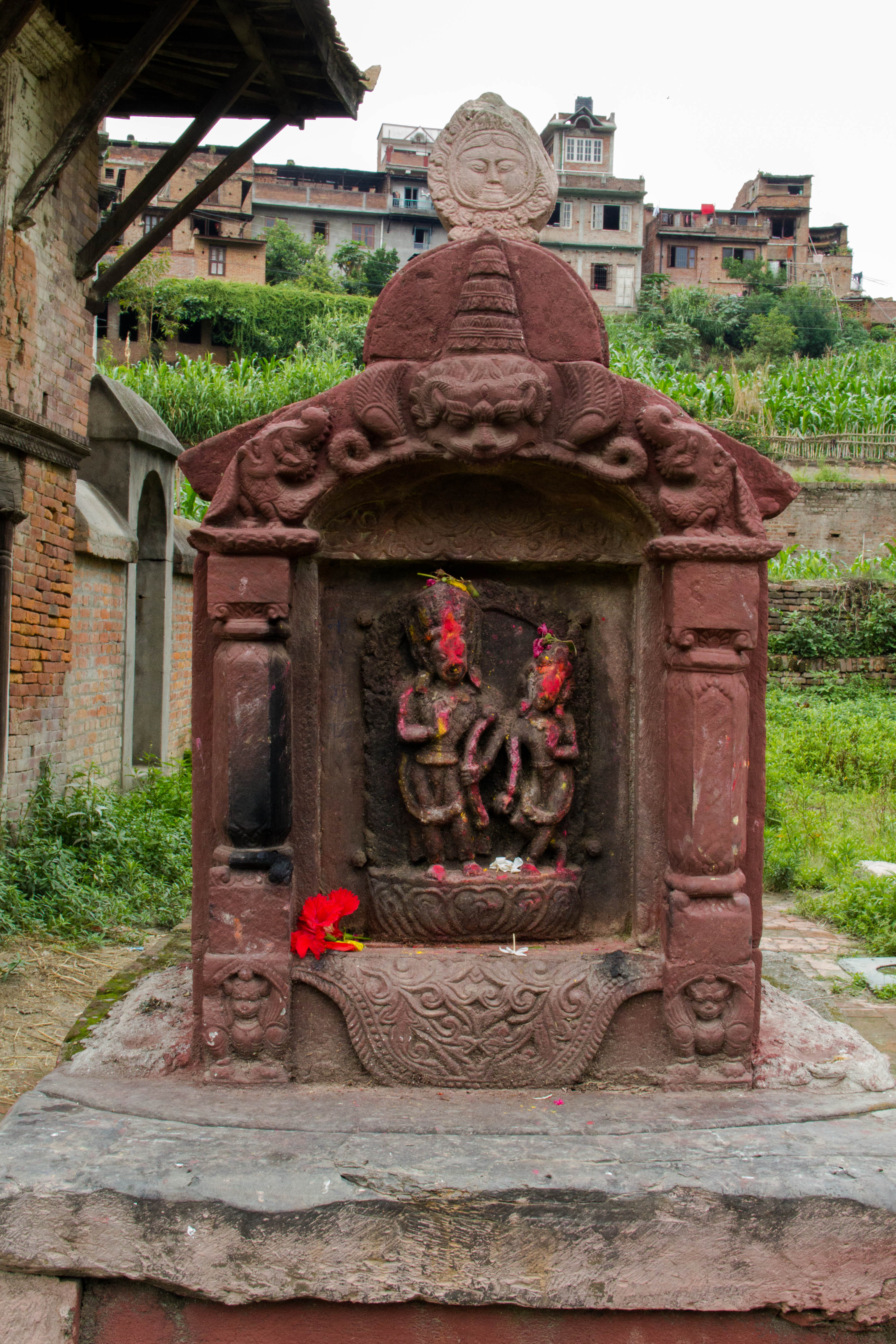
The Asvamedha Ritual


The Asvamedha, otherwise known as the Indo-Aryan Horse Sacrifice, is a ritual that closely resembles an Indian fertility rite. The earliest mention of the Asvamedha is found in the Rg Veda (Stutley 254). The ritual is often defined by three different phases of Indo-Aryan expansion in Upper India, with each phase representing a different pattern of settlement. The development of the Asvamedha is dependent on the occurrence of these patterns. Therefore, the Asvamedha would not have been introduced without the representation of the phases. By putting the three sections into chronological order, a time-line is given for the creation of the Asvamedha ritual. The three phases include the Aryavarta, the Madhyadesa, and the advance of the tribes. The Aryavarta phase is the first phase that occurs in the time-line, and it includes the initial north-west settlement of the Aryans. During this time most of the Rg Veda was written. The Madhyadesa phase, otherwise known as the second occurring phase in the development of the Asvamedha, is about the expansion of the Aryans to the middle-land. The other three Vedas were constructed during the Madhyadesa phase, along with some of the Brahmanas. The final phase, known as the advance of the tribes, represents the first historic evidence of the formation of a caste system. Kings and priests were the most dominant figures during this time. This phase also concentrated on the introduction of a legal code. The three phases or periods in Hindu history are defined by important rulers. The ruler for the West was known as Svaraj, the North was named after Viraj, the middle country was Raja and finally the East was known as Samraj (Stutley 253).

According to the Rg Veda, a king performs the Horse Sacrifice in order to gain wealth, power, offspring, horses, and to “fulfill the rivers”. The Vajasaneyi Samhita also expresses similar requirements to those of the Rg Veda. In contrast, the Taittirya Samhita and the Brhad-Aranyaka Upanisad have quite different requirements (Stutley 255-256). Specifically, the Satapatha Brahmana divides the Asvamedha into two distinct parts, the preparatory rite, which includes a military challenge, and the culminatory rite, representing a celebration of the former’s success (Stutley 256).

The preparatory phase is described in the Satapatha Brahmana. It begins with a specific person who is made to do the sacrifice, usually a king. The king is to select a stallion to be offered to the gods. The horse that is chosen must be a good stallion, as it is representative of the king himself. The horse is purified by darbha (another name for kusa). The horse is then offered to various gods such as Agni (fire god), Soma, to the waters, Savitar, Vayu (wind-god), and is eventually offered to Visnu, Indra, Brhaspati, Mitra, and Varuna. The horse is now able to wander around for one full year and is escorted by armed followers of the king (Stutley 256). This year of wandering can be seen as a ritualized conquest. The armed escorts are to make sure that the ruler of the land that the horse wanders onto recognizes the authority of the king that is performing the sacrifice. The Asvamedha, therefore, is seen as a very dangerous ritual; both by neighbouring areas and by the king himself (White 284). Neighbouring rulers can either keep the horse, initiating warfare, or may choose to leave the horse and submit. If the rulers decide to keep the horse, then the escorts are already there, fully armed, and ready to fight. The escorts are to guard the horse throughout the entire year to prevent any complications with the ritual. If any complications should occur, alternative offerings are to be made to the gods. Additional offerings are routinely made to the gods such as Savitar during the horse’s time of wandering in order to sustain the horse. Prayers are repeated every eleven days by the hotar priest. When the horse finally returns home the king’s consecration has begun (Stutley 256-257). Significant people are placed in specific places around the area in which the ritual is taking place. Specifically, there are four separate groups of one hundred and one people that surround the area. The groups represent the four directions, North, South, East and West, along with kinship ties. The surrounding people are representative of the kingdom and the world (White 298). A symbolic “four eyed dog” is killed in hopes to drive away evil spirits from the horse. The horse itself is now representative of the evil enemy. After the horse has wandered to neighbouring lands and has met with the neighbouring enemies, it is no longer seen as a symbol of the king. The horse is now thought to be possessed with papman, and therefore must be slain. It is believed that when the dog is slain, the papman is also being killed. [White (1989) describes the papman as the name of a demon or cosmic evil; the origin of papman comes from Prajapati’s incest with his own daughter Rohini]. The sacrificial instrument that is used to kill the dog is made of sidhraka wood (White 297). The ritual of killing the four eyed dog serves as a sort of “pre-sacrifice” in some ways. The dog is to be killed first, in preparation for the sacrifice of the horse. However, in some texts the idea of a four eyed dog is regarded as non-sense. For example, the Taittiriya Brahmana describes the additional eyes as two light spots above the eyes of the dong (White 284-285). In continuation of the ritual, the king, along with three other companions, are strapped to a chariot with the horse. The horse is then killed on a golden cloth, laid on the ground. The Queen Consort is expected to lie down beside the horse to mimic copulation. This act, in turn, is believed to result in fertility and offspring (Stutley 259). The horse is then dissected, and offerings are made to various gods, such as Prajapati. The ritual ends with a purifying bath and gifts are often presented to the priests (Stutley 260).

There are various symbols that are used to represent significant figures and ideas in the Asvamedha ritual. The four eyed dog, for example, is killed to hopefully drive the evil spirits from the horse. The dog is often also regarded as “the embodiment of evil and misfortune” (Stutley 257-258). By binding and killing the dog, the king is symbolically beating his enemies and future peril. After being killed, the dog is sent to float south, which is known as the direction of death. By sending the dog in the direction of death, the rite is concluded (White 300). The god Yama (god of death) is believed to have two dogs of his own named syama and sabala. Each of the dogs is said to have four eyes. By relating the sacrificial four eyed dog to Yama, the dog becomes a symbol of death (White 285). A phrase that describes the four eyed dog used in the Asvamedha is “catur-aksa svan”. Catur simply means “four”, and svan means “dog”. Aksa has multiple meanings, one being eye, and in another context can be taken to mean “die”, as in the singular form of dice, which can be brought to the conclusion that “dice” is another symbol in the Asvamedha ritual (see White 287). The meaning of the dice has gradually come to be lost in the ritual. One explanation for the use of dice in the Asvamedha is similar to Einstein’s; “God plays dice with the universe”. A second interpretation of the meaning of dice is that “The gods move around like dice throws which give us wealth and which take it away”. This explanation insinuates that the universe plays dice with the gods (White 288). Another significant symbol used during the sacrifice is the ewe, which is offered to the goddess Sarasvati. The ewe is placed under the horse’s jaws, displaying the ongoing dependence of women on men (Stutley 258). The “body-encircling” animals are the fifteen different animals which are used in the sacrifice of the horse to represent varja (the magical thunder bolt) [Stutley (1969) Varja is believed to be representative of power and vigour to repel evil]. Knives are also important symbols during the Asvamedha. The knife that is used to slaughter the horse is gold, representing royalty. A copper knife is used on the “body-encircling” animals to represent chiefs, heralds, and minor aristocracy. Finally, an iron knife is used to kill the remaining animals, representing the commonalty (Stutley 258).

Work Cited

Stutley, Margaret (1969) “The Asvamedha or Indian Horse Sacrifice” Folklore, Vol. 80, No. 4, p. 253 – 261.

White, David Gordon (1989) “Dogs Die” History of Religions, Vol. 28, No. 4, p. 283 – 303: The University of Chicago Press.

Related Topics for Further Investigation

–       The Rg Veda

–       Svaraj

–       Viraj

–       Raja

–       Samraj

–       The Vajasaneye Samhita

–       The Taittirya Samhita

–       The Brhad-Aranyaka Upanisad

–       The Satapatha Brahmana

–       Savitar

–       Agni

–       Visnu

–       Vayu

–       Indra

–       Mitra

–       Varuna

–       Prajapati

–       Papman

–       Yama

Noteworthy Websites

http://en.wikipedia.org/wiki/Ashvamedha

http://www.indianetzone.com/6/asvamedha_yajnya.htm

http://en.wikipedia.org/wiki/Horse_sacrifice

http://sms.zrc-sazu.si/pdf/08/SMS_08_Zaroff.pdf

Article written by: Dallyn Giroux (April 2010) who is solely responsible for its content.